
Accessibility options by NETOYED
Language


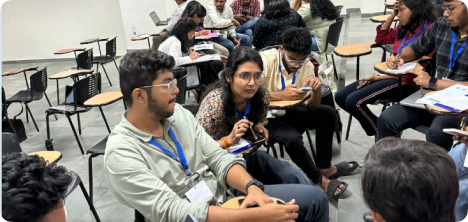
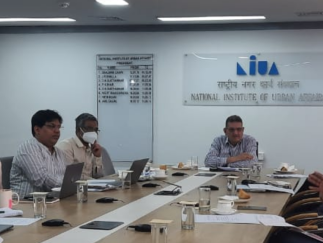
As part of its academic alliance with the National Mission for Clean Ganga (NMCG), the River Cities Alliance (RCA) Secretariat at the National Institute of Urban Affairs (NIUA) conducted an Integrated Studio Workshop on Water & River Sensitive Planning for Guwahati on 20 March 2026 at the School of Planning and Architecture (SPA), Bhopal. NIUA served as a knowledge partner, providing technical guidance on river- and water-sensitive urban planning while sharing insights from RCA’s engagement in Guwahati, an RCA member city.
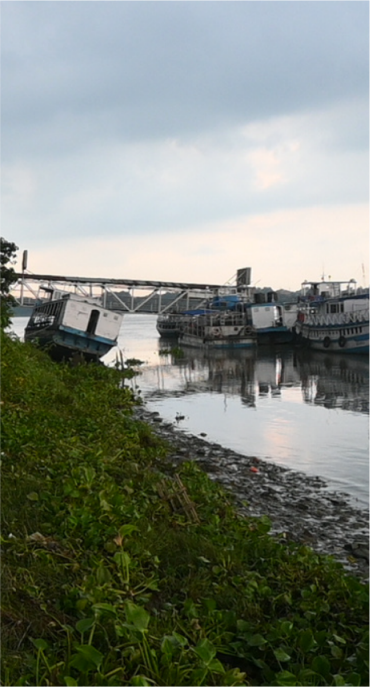
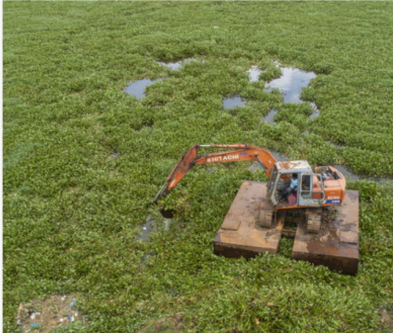
The workshop was designed as a co-learning platform for 35 students from Environmental Planning, Urban Design, and Landscape Architecture, focusing on the Guwahati Metropolitan Area—a highly dynamic and ecologically sensitive region shaped by the Brahmaputra River, wetlands, and surrounding hill systems, and increasingly exposed to flooding, landslides, and unplanned urban expansion.
Through expert-led sessions by Ms. Manju Rajeev Kanchan and Ms. Kriti Trivedi, participants were introduced to key frameworks including Water Sensitive Urban Design and Planning (WSUDP), the Urban River Management Plan (URMP), and River-Sensitive Master Planning (RSMP). These concepts were contextualised for Guwahati to build applied understanding of river-sensitive urban development.
The workshop combined technical inputs with interactive studio exercises, including the River Run simulation and a collaborative planning task focused on climate-resilient urban strategies. Students worked in interdisciplinary groups to address priority stretches of Guwahati, translating concepts into spatial planning and design interventions.
Discussions centred on hydrological systems, flood resilience, wetland restoration, ecological connectivity, and socio-spatial vulnerability, reinforcing the need to integrate ecological considerations into statutory planning processes. The exercise highlighted how river-sensitive approaches can inform more resilient and inclusive urban development strategies.
The workshop reflects RCA’s continued effort to strengthen the link between policy, practice, and pedagogy by embedding river-sensitive thinking into planning education and nurturing a new generation of professionals equipped to design resilient and water-sensitive cities.