
Accessibility options by NETOYED
Language



Urban sanitation remains a critical priority for Uttarakhand, shaped by its hilly terrain, fragile ecology, and dispersed urban settlements. Addressing these unique challenges, the Urban Development Directorate, Government of Uttarakhand, in collaboration with the National Institute of Urban Affairs, launched a statewide workshop series on the Operationalisation of the State Septage Management Protocol. Conducted across all 13 districts between March and May 2025, the initiative focused on strengthening the capacity of Urban Local Bodies to implement Faecal Sludge and Septage Management practices. Engaging over 160 officials from 102 ULBs, the workshops combined hands-on tools, practical training, and the development of localised Town Action Plans. Requested by the Urban Development Directorate and supported by NIUA’s Sanitation Capacity Building Platform (SCBP), this initiative marks a significant step toward building sustainable, scalable sanitation systems across the state.

Knowing where pollution enters a river is the first step to stopping it. Yet for most cities, drainage outfalls remain unmapped and unmonitored. This Guidance Note is built on the learnings of a large-scale drone-based aerial survey of the Ganga, covering approximately 2,200 sq. km, which identified, geotagged, and mapped drains and outfalls discharging into the river, culminating in the development of a Drain Decision Support System (Drain DSS). Drawing from this experience, the Guidance Note prescribes standardised technical parameters for drone-based drainage surveys, from flight specifications and camera orientation to processing workflows that generate high-resolution geospatial output including ortho mosaic imagery, Digital Terrain Models, and GIS-based drainage layers. Designed as a practical reference for state and city agencies, datasets generated through this process are intended to feed into city and state-level Drain Dashboards and the national database maintained by the National Mission for Clean Ganga, to build a connected, evidence-based picture of river pollution sources across India.

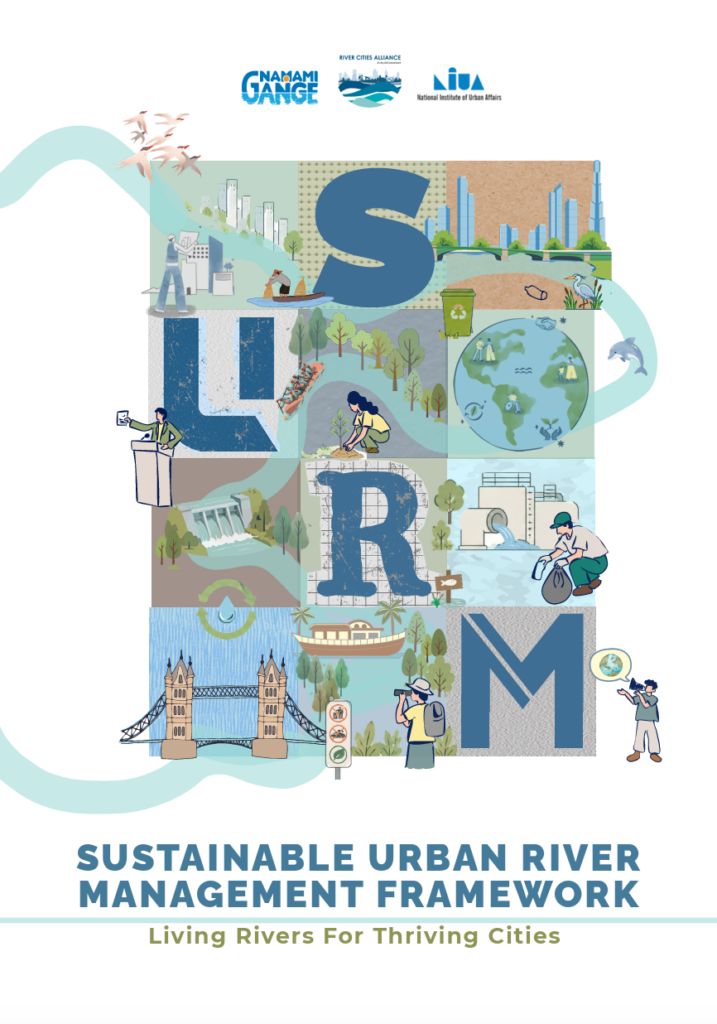
National Institute of Urban Affairs (NIUA) & National Mission for Clean Ganga (NMCG) developed a unique first-of-its-kind strategic framework for managing urban river stretches in the Ganga River Basin called the “Urban River Management Plan”. The framework essentially requires all cities to plan and implement their actions (a mix of planning and project-related interventions) under a ten-point agenda to ensure that the cities act as inter-related operational units working towards a common vision for the river.
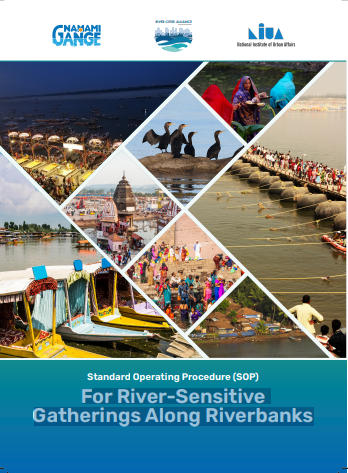
Rivers have long been central to Indian culture and spirituality, with millions gathering along riverbanks for festivals like Kumbh Mela, Chhath Pooja, and Ganesh Visarjan. However, these events often lead to pollution, waste, and ecological disruption. To protect our rivers while maintaining our cultural heritage, the NIUA, under the Ministry of Housing and Urban Affairs, in collaboration with the National Mission for Clean Ganga, has created a Standard Operating Procedure (SOP) for organizing river-sensitive gatherings. This SOP is intended to guide authorities and organizers involved in managing events on river banks on how to minimize the environmental footprint of large gatherings. With a step-by-step approach of pre-event planning, active event management, and post-event restoration, the SOP aspires to ensure the pristine nature of rivers flowing continuously and revered forever.
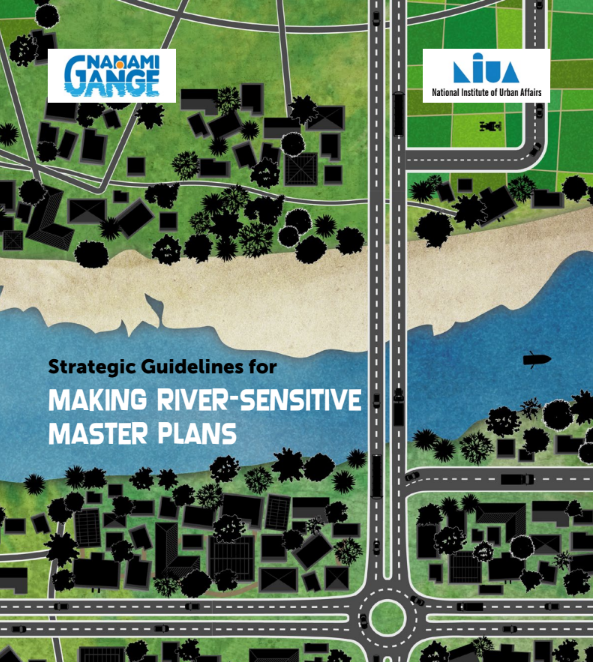
National Institute of Urban Affairs (NIUA) & National Mission for Clean Ganga (NMCG) developed Strategic Guidelines for “Making River-Sensitive Master Plans”. The purpose of this guidance document is to help city planners across the basin, and the country at large, understand how to integrate river-sensitive thinking into a Master Plan.
The “Guidelines for Constructed Wetlands for Sewage Treatment in India”, formulated by Hydro and Renewable Energy Department (HRED) of Indian Institute of Technology (IIT), Roorkee under aegis of National Mission of Clean Ganga (NMCG), Ministry of Jal Shakti, Govt of India is now available for all stakeholders and agencies in the water sector. Constructed wetlands (CWs) for sewage treatment holds immense potential in preserving our environment and improving wastewater management. The CWs guidelines have been developed as a point of reference for use by State and Central line agencies, NGOs, Industries, and Consultants in designing CWs as nature-based techniques for sewage management.
The guidelines have been developed after an exhaustive evaluation process conducted by a collaboration of renowned organizations, and by taking into account the inputs from numerous central and state agencies, including National River Conservation Directorate (NRCD), National Mission for Clean Ganga (NMCG), Department of Drinking Water and Sanitation, Ministry of Jal Shakti, Ministry of Housing and Urban Affairs (MoHUA), Central Public Health and Environmental Engineering Organisation (CPHEEO), Central Pollution Control Board (CPCB), State Pollution Control Boards (SPCBs), academic institutions and other agencies.
This Advisory Note on Improving Urban Water Supply and Sanitation Services (WSS) in India is an effort to provide guidance to States and Cities in adopting specific policies and governance structures for improving service delivery to the customers.
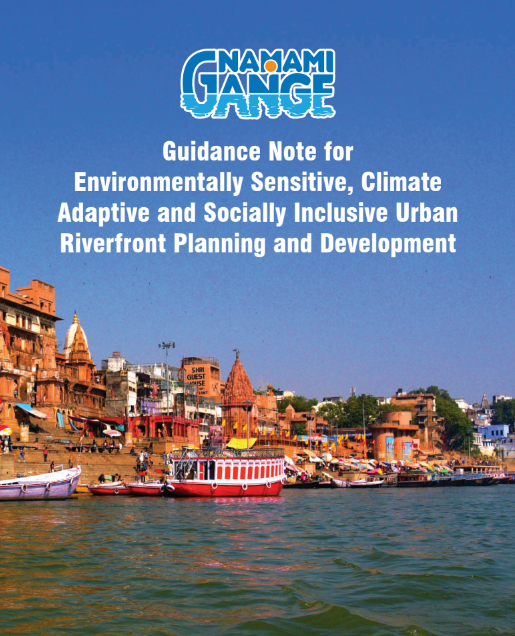
A guidance note on urban riverfront development has been developed by NMCG and WRI to provide a broad framework in order to plan and develop environmentally sensitive, climate adaptive and socially inclusive approach to urban riverfront projects.
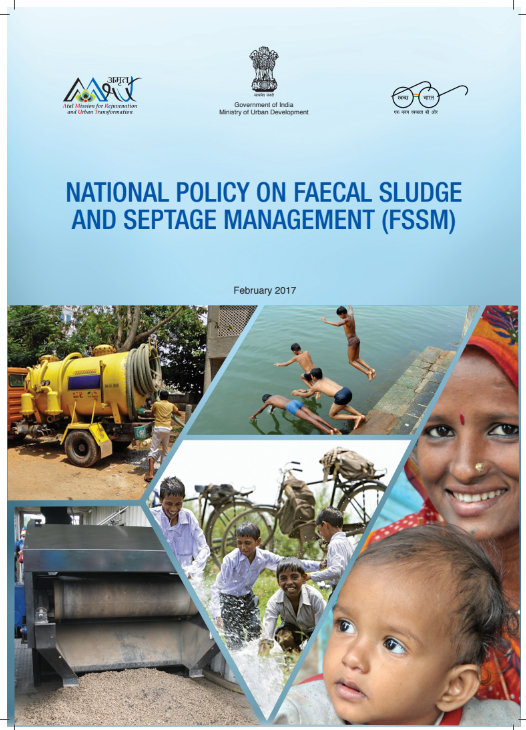
Ministry of Urban Development has launched the National Policy on Faecal Sludge and Septage Management (FSSM) to facilitate nationwide implementation of FSSM in India.
Ganga Rejuvenation act was notified on 7th October 2016 for prevention, control and abatement of environmental pollution in River Ganga and to ensure continuous adequate flow of water so as to rejuvenate the River Ganga to its natural and pristine condition.
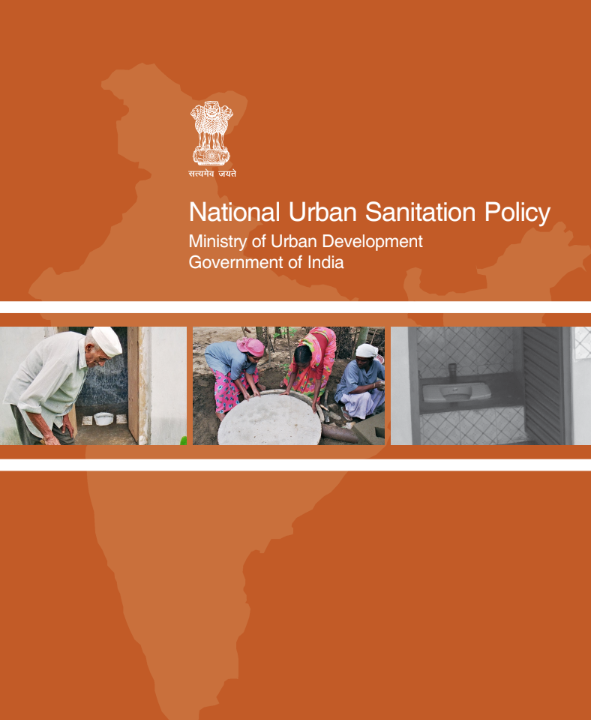
With the aim of improving the sanitation situation in urban areas, the Government of India (GoI) sanctioned a policy paper prepared by the Ministry of Urban Development (MoUD) as the National Urban Sanitation Policy (NUSP).
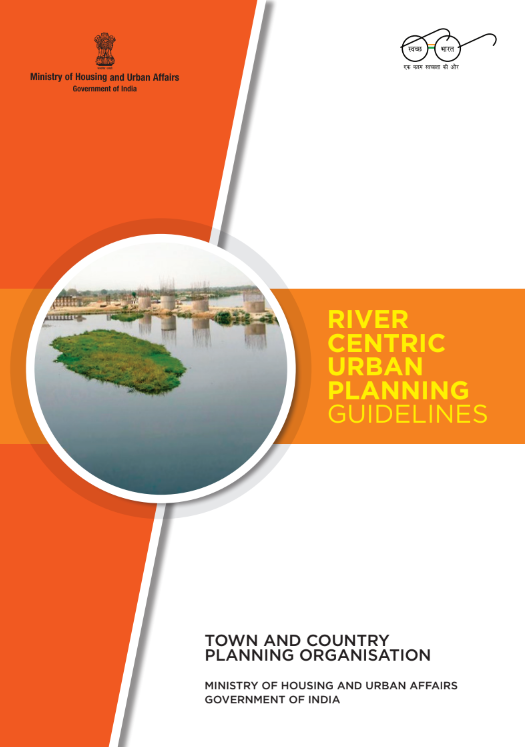
A River centric urban planning guideline have been prepared providing River Regulation Zones (RRZ) as an advisory for state/UTs to ensure sustainability of rivers passing through cities and towns and to regulate the development along the river banks and floodplain
India’s growing cities are under mounting water stress. Depleting groundwater, strained utilities, and rising wastewater volumes demand an urgent rethink of how urban water is managed. The way forward lies in shifting from supply-side approaches to demand management, improving distribution efficiency, and scaling wastewater treatment and reuse. Untreated wastewater is a public health risk and an environmental threat that cities can no longer afford to ignore. Addressing these challenges requires a clear vision and strong policy commitments to manage water demand and reduce the wastewater footprint of Indian cities.
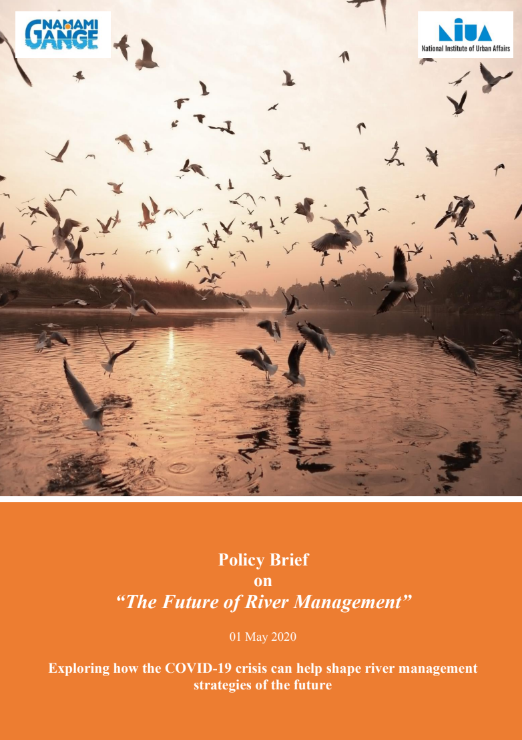
This policy brief is expected to provide useful insights to basin managers, government agencies, engineers, planners, researchers, and students for creating avenues to strengthen river management in the future.