Accessibility options by NETOYED
Language


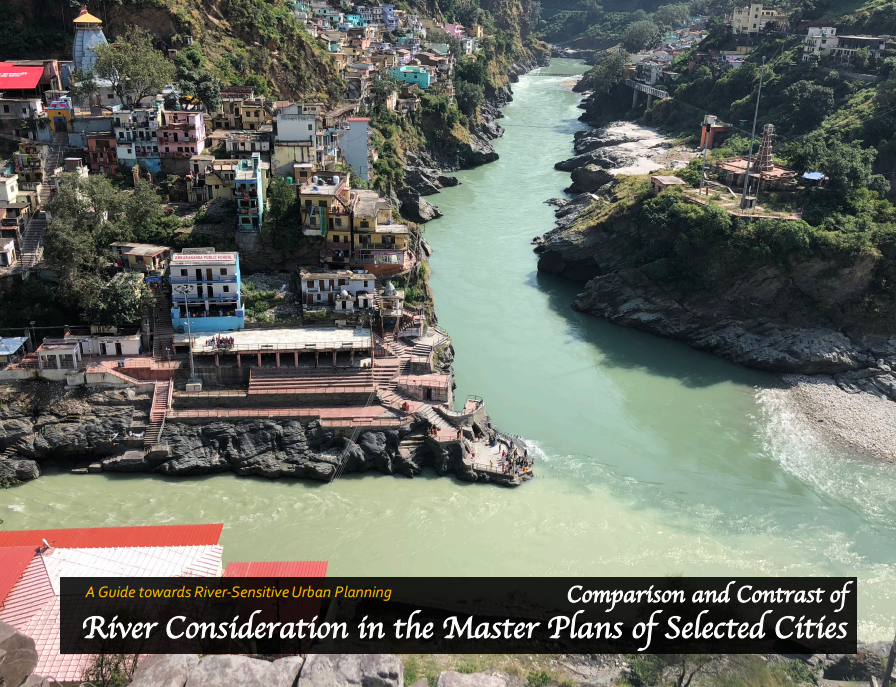
National Institute of Urban Affairs (NIUA) & National Mission for Clean Ganga (NMCG) prepared a knowledge product on ‘Comparison and Contrast of River Consideration in the Master Plans of Selected Cities’. This document shares examples of river-related aspects adopted by Master Plans of various cities.

With the advancement of knowledge, percolation of information and technology and increasing awareness among citizens, efforts have already been made across the globe to come up with unique and out-of-the-box initiatives for river management. National Institute of Urban Affairs (NIUA) & National Mission for Clean Ganga (NMCG) prepared a knowledge product on ‘Innovations in Urban River Management’. The purpose of this product is to showcase innovations, especially to city governors and administrators, in order to help them identify possible solutions for local issues. Several innovative case examples from the domain of Information & Technology, Robotics, Artificial Intelligence, Geographic Information Systems, etc. are presented in this product.
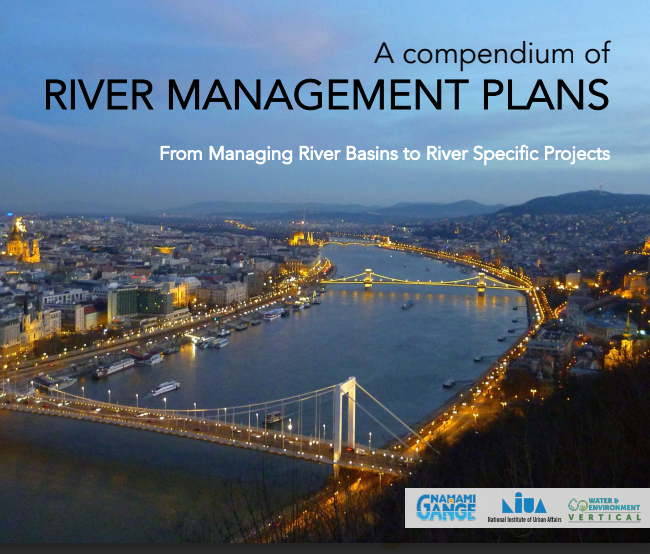
National Institute of Urban Affairs (NIUA) & National Mission for Clean Ganga (NMCG) prepared a knowledge product titled ‘A Compendium of River Management Plans’. This product tries to capture some of the best practices adopted for effective river management across the globe, while emphasizing the need of comprehensive river management for addressing the issues faced by river cities in India. The case examples incorporated in this Knowledge Product highlight the globally prevalent river management practices, with a focus on key strategies for – ecological restoration of the river (Environment); enabling the re-connect of people with the river (Social) and; boosting the livelihoods of people associated with river activities (Economy). An assessment of such attempts can provide an opportunity to adopt and replicate them.
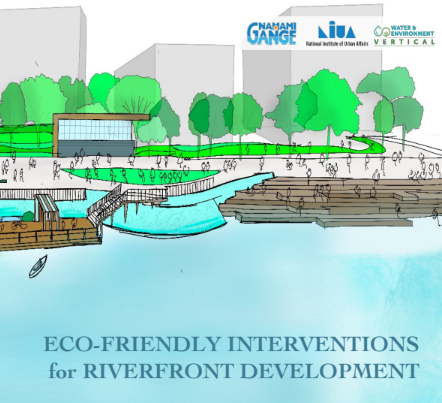
Rivers play an intrinsic role in community engagement. They have vast potential for activating a city’s social, economic as well as cultural life. River edges, owing to their natural character and landscape, are ideal locations for exploring the potential of ecologically developed recreational areas within the city. National Institute of Urban Affairs (NIUA) & National Mission for Clean Ganga (NMCG) prepared a knowledge product on ‘Eco-friendly Interventions for Riverfront Development’. This knowledge product showcases a set of best practices, with eco-friendly interventions and specific elements, that can be adopted for environmentally sensitive, economically viable and socially cohesive development of the urban riverfronts. A mix of practices can be adopted together as per the local needs, to achieve the desired goal of developing eco-sensitive riverfronts, which also improves the social connect while maximising the economic potential of the river.
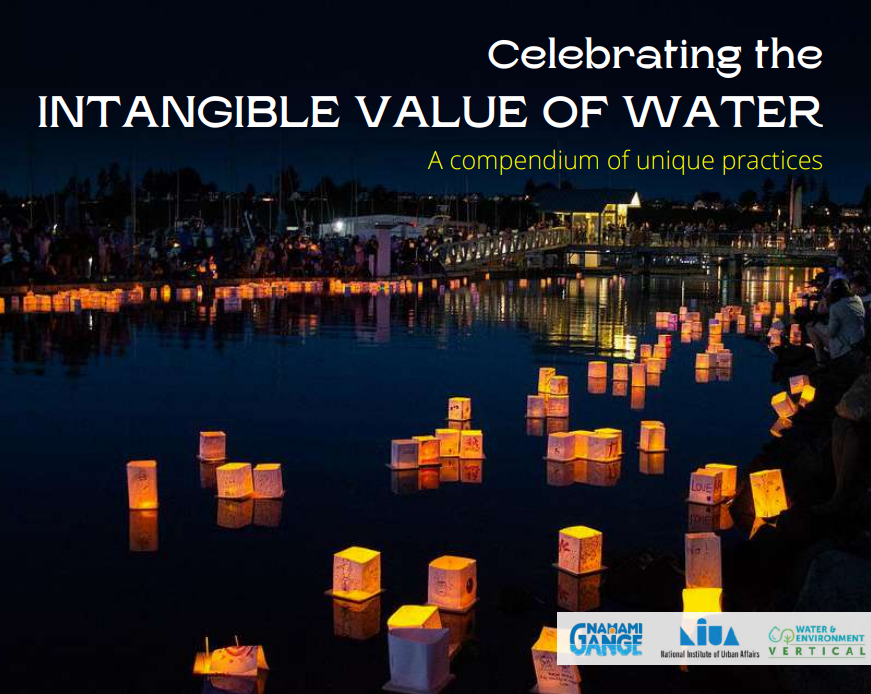
Perhaps no other natural resource is as significant as water in the path to sustainable development. Achieving water security is, therefore, a top priority for governments across the world, through various policies, plans, and projects. It is important that such initiatives acknowledge and leverage on the intangible value of water as a means to enhance the overall water security of the region. The intangible value of water is found in almost every country through unique cultures, traditions, festivals, and rituals. This underscores the intrinsic place of water in society, far beyond merely being a source of meeting basic human needs. As the adage goes, what we cherish, we value, and what we value, we protect. Leveraging on the intangible value of water can, therefore, serve as a sound strategy to ensure its judicious use. National Institute of Urban Affairs (NIUA) & National Mission for Clean Ganga (NMCG) prepared a knowledge product on ‘Celebrating the Intangible Value of Water’. This compendium highlights unique examples from different corners of the world where the intangible value of water is celebrated through customs, traditions, festivals, and beliefs.
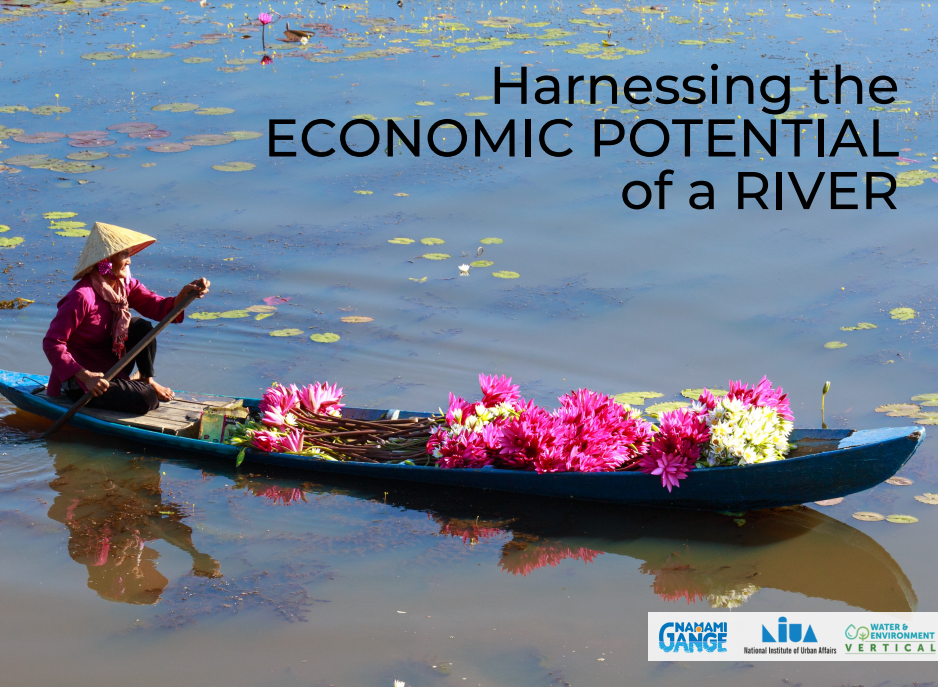
National Institute of Urban Affairs (NIUA) & National Mission for Clean Ganga (NMCG) prepared a knowledge product on ‘Harnessing the ECONOMIC POTENTIAL of a RIVER’. This knowledge product is a compilation of river-related activities from across the world, that have helped in leveraging the economic potential of the river ecosystems.
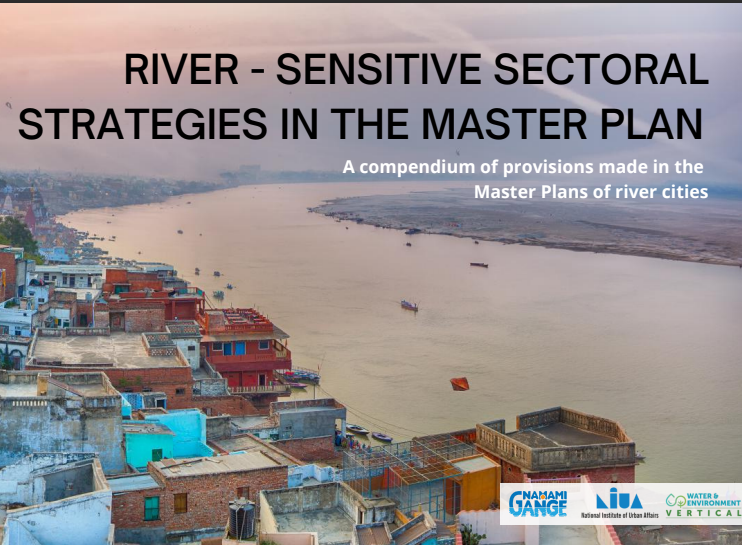
National Institute of Urban Affairs (NIUA) & National Mission for Clean Ganga (NMCG) prepared a knowledge product on ‘River-Sensitive Sectoral Strategies in the Master Plan – a compendium of provisions made in the Master Plans of river cities’. This document is a compilation of sectoral provisions made in the Master Plans of river cities across the globe, for shelter, mobility, infrastructure, heritage or economy, that have an indirect connection with urban river management.
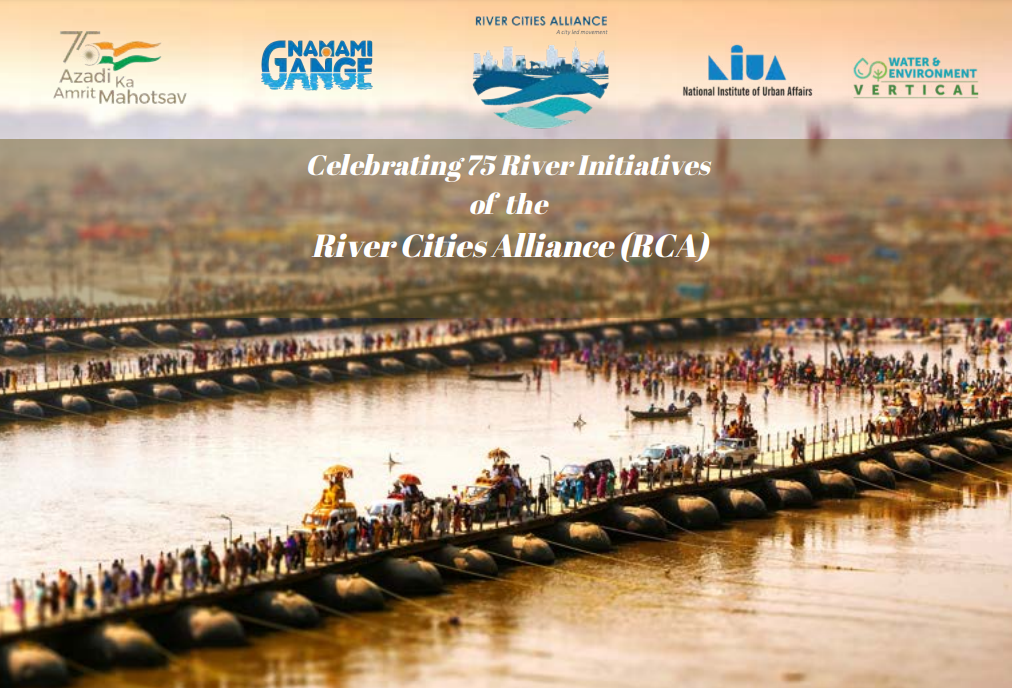
The National Institute of Urban Affairs (NIUA) and the National Mission for Clean Ganga (NMCG) have prepared a compendium on ‘Celebrating 75 River Initiatives of the River Cities Alliance (RCA).The compendium presents seventy-five examples of river-related initiatives undertaken by alliance member cities. The budgets for these interventions are mostly from the ULB-owned funds, national missions like SBM, AMRUT and NMCG. Several interventions are funded through CSR contributions.
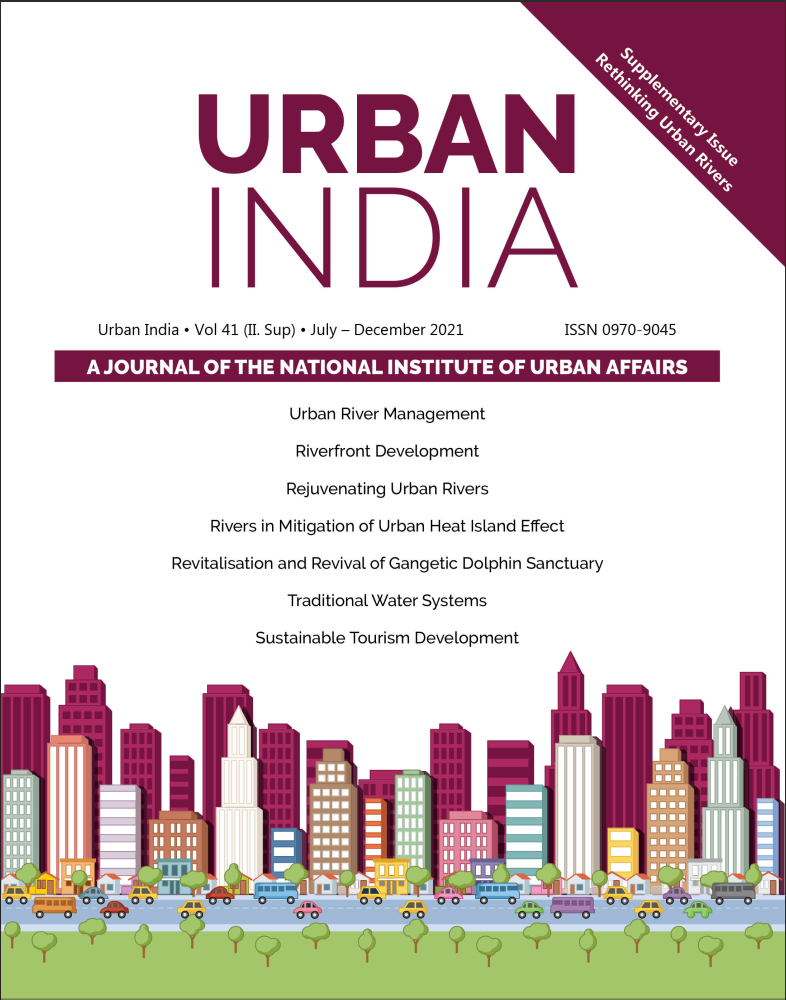
This supplementary edition of Urban India, the National Institute of Urban Affairs’ (NIUA) bi-annual journal, contains eight cutting-edge research articles written by the student finalists of the Student Thesis Competition (STC), Season 1, along with various sector experts. STC is conducted annually by NIUA in collaboration with the National Mission for Clean Ganga (NMCG) to provide a platform for students to pitch their innovative research proposals, and gain financial and academic support. In 2021, students developed their projects across various thematics such as riverfront development, rejuvenating urban rivers, mitigating the urban heat island effect, promoting river tourism, and many others. Their research has been made available nation-wide in this special edition, which contains their groundbreaking case-studies on the Hooghly River (Kolkata), Kaliasot River (Bhopal), Yamuna River (Mathura and Delhi), Ganga River (Bihar), and Sarayu River (Ayodhya) – providing a comprehensive overview of the riverine ecosystem of urban India.
[Urban India, Vol 41 (II. Sup), July-December 2021, ISSN 0970-9045]
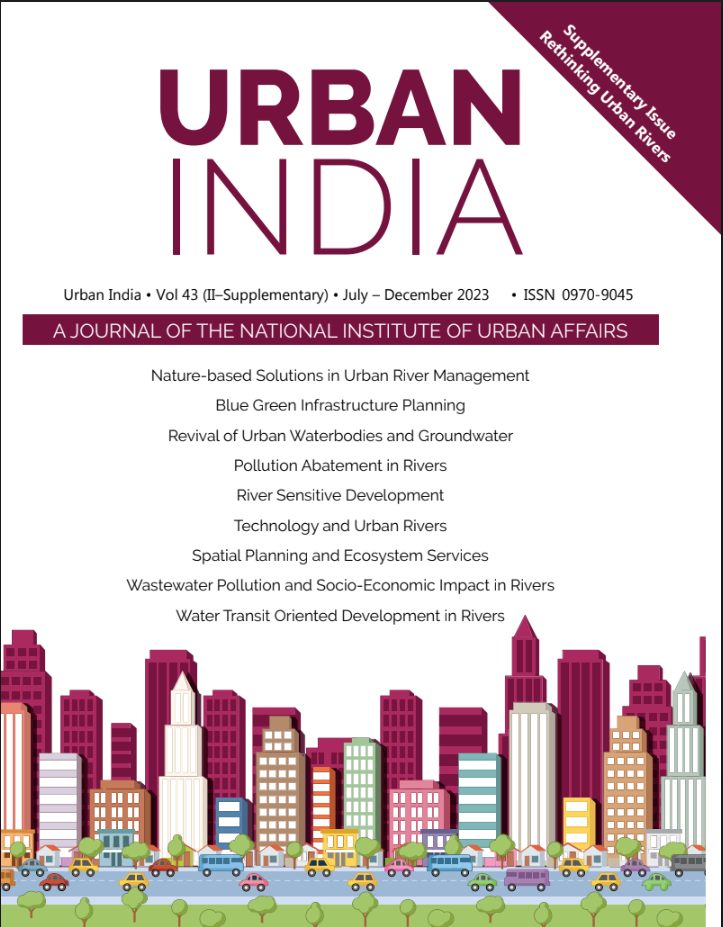
Volume 43 of Urban India, the National Institute of Urban Affairs’ (NIUA) bi-annual journal, contains nine pioneering research articles written by the student finalists of the Student Thesis Competition (STC), Season 2, along with various sector experts. STC is conducted annually by NIUA in collaboration with the National Mission for Clean Ganga (NMCG) to provide a platform for students to pitch their innovative research proposals, and gain financial and academic support. In 2022, students across India developed their projects across various thematics such as blue green infrastructure planning, the revival of urban waterbodies and groundwater, pollution abatement in rivers, wastewater pollution, engaging citizens in river management activities, and many others. Research conducted by successful student candidates has been published in this supplementary edition of Urban India, now available to all. This edition dives deep into various well-rounded case studies on the Thamirabarani River (Tirunelveli), Shekha Jheel (Aligarh), River Ganga, Assi and Varuna River (Varanasi), Hooghly River (Kolkata), the Cauvery Basin, Yamuna River (Delhi), and Jhelum River (Srinagar) – where students have offered their valuable insights and evidence-based policy inputs on urban river management in India.
[Urban India, Vol 43 (II-Supplementary), July-December 2023, ISSN 0970-9045]
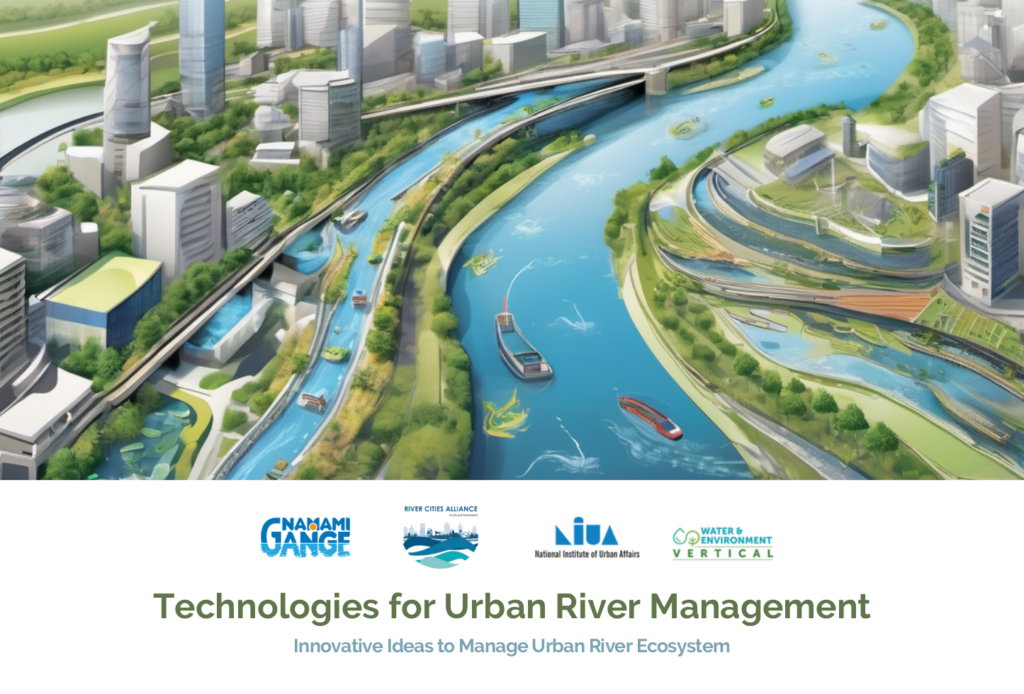
The compendium is a comprehensive collection that encompasses over 30 distinct technologies, each developed by various institutions and private companies. These technologies are specifically designed to rejuvenate and manage the river and its associated elements. Spanning a wide range of approaches and methodologies, these innovations address various aspects of river management, including water quality improvement, sedimentation control, habitat restoration, improving people river connect, augmenting groundwater, improved data management and biodiversity conservation. By bringing together diverse expertise and innovative solutions, the compendium serves as a valuable resource for stakeholders involved in river conservation and management efforts.